Collection: Black Square Paintings

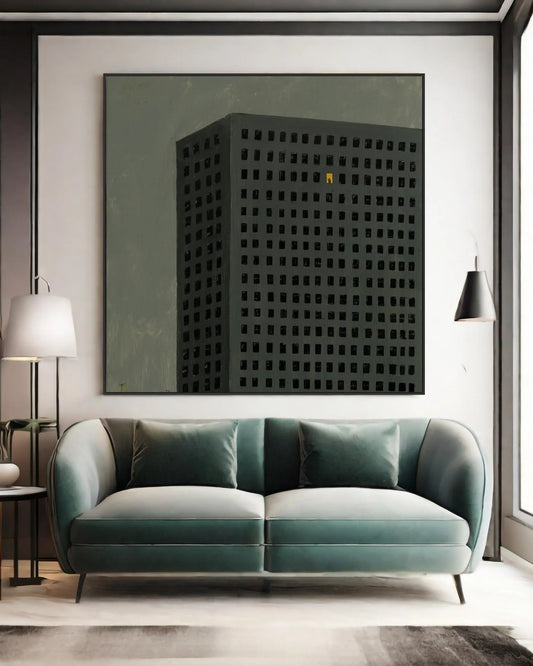
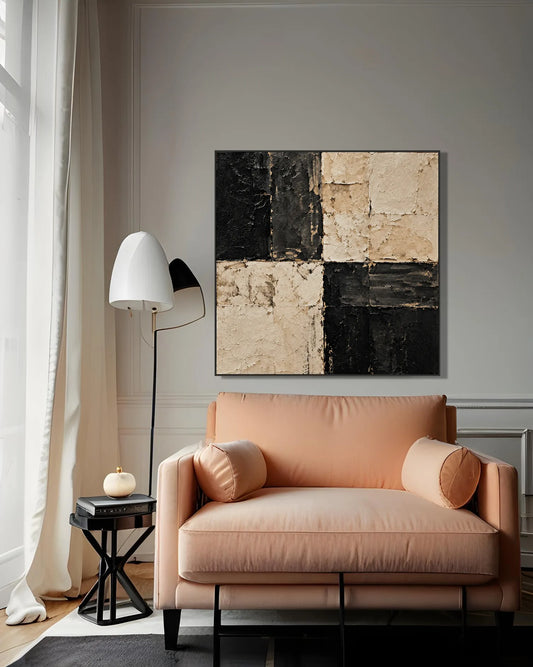
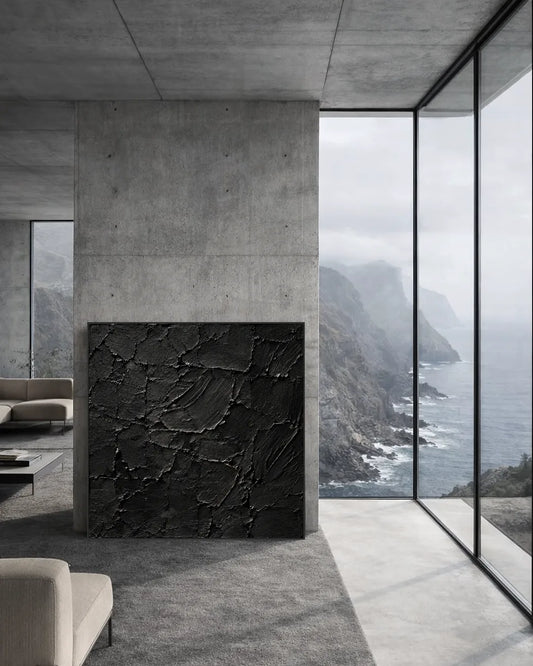
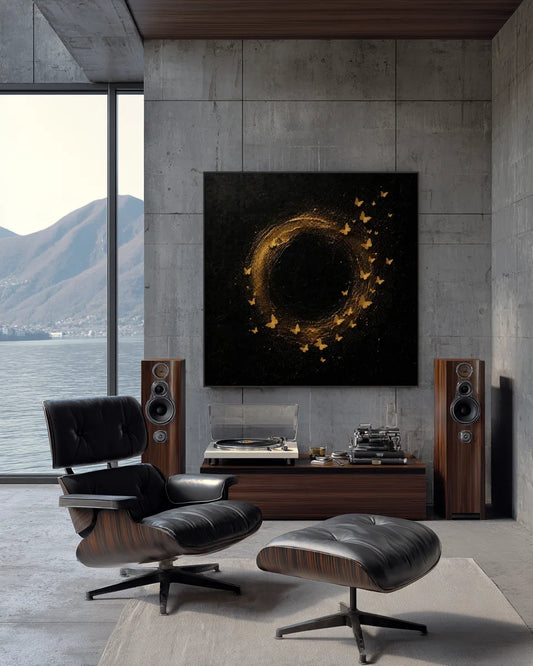
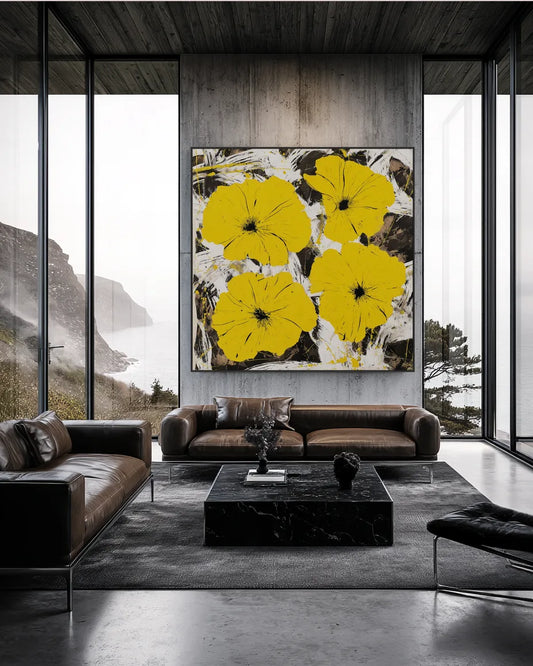
There's a reason black keeps showing up in modern interiors as more than just an accent — it's one of the few colors that reads as both grounding and dramatic at the same time. This collection of black square paintings leans fully into that duality, built almost entirely on texture rather than color variation. Heavy palette-knife strokes, cracked ridges, glossy patches against matte ones — every piece here relies on the physical presence of the paint itself, so the surface shifts depending on the light in the room.

Frequently Asked Questions

What makes black such a significant color in fine art?

Black has carried serious weight in art history well beyond its role as a background or shadow color — from Ad Reinhardt's near-invisible black-on-black canvases to Pierre Soulages building an entire late career around what he called "noir-lumière," light reflected through black paint. Within our black square paintings collection, that same idea shows up through palette-knife texture: ridges and raised strokes catch and bend light differently depending on where you're standing, so a piece that reads as flat black in a photo is often anything but flat in person. Black, done with real texture, behaves more like a material than a color.

Why do some black square paintings include a single accent color instead of staying fully monochrome?

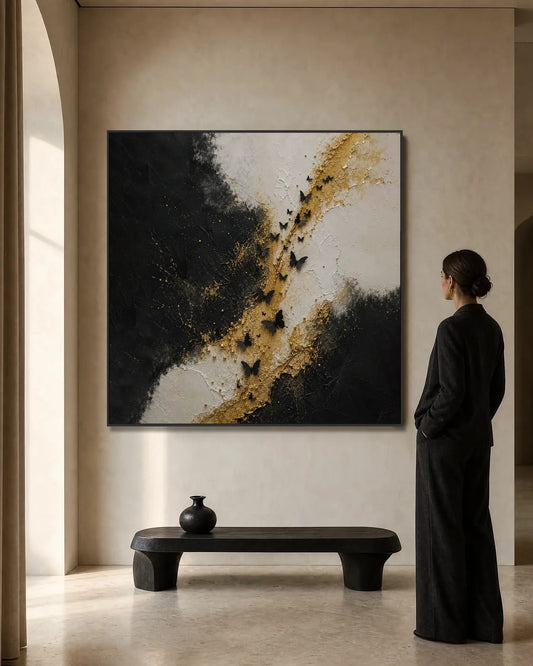
A lone accent — a streak of red, a vein of gold, a patch of copper — works as a kind of pressure release in an otherwise restrained composition. It gives the eye one clear place to land first before taking in the surrounding texture. In our collection, these accents are usually sparing rather than decorative, closer to how a single word might stand out in a page of dense text. The goal isn't to soften the black but to sharpen the moment of contrast.

How does a black square painting change the feel of a room?

Black reads as grounding rather than heavy when it's used well — it tends to anchor a space the way a dark wood floor or a piece of black furniture does, giving lighter walls and furnishings something solid to sit against. A black square painting in particular works as a visual full stop in a room that might otherwise feel busy or under-defined. It pairs naturally with walnut, brass, leather, and warm neutrals, and tends to make surrounding colors look more saturated by comparison.

Will a black square painting make my room feel darker or smaller?

Generally, no — a single black painting reads as a focal point rather than a mood-setter for the whole room, since it occupies a defined, contained area rather than spreading across a wall the way paint color does. If anything, a well-placed black piece can make a room feel more intentional and complete rather than smaller, especially in spaces with good natural light or warm-toned furniture to balance it. The exception is pairing several very large, very dark pieces in a room with little other light — in that case, one strong black statement piece usually does more than several would.

What size black square painting works best for a large, oversized statement piece?

For an oversized black square painting meant to anchor a room on its own — above a sofa, a bed, or a stairwell wall — sizing in the 40 to 60 inch range (or larger, for taller ceilings) tends to give the texture enough surface area to really register. Black, more than most colors, benefits from scale, since the palette-knife ridges and shadow play that define these pieces become more dramatic as the canvas grows. A small black painting can read as a dark square; a large one reads as a genuine architectural presence in the room.

Where do black square paintings work best — residential or commercial spaces?

Both, for different reasons. In homes, they suit entryways, primary bedrooms, and living rooms that want one confident, grounding piece rather than several smaller ones. In commercial settings — hotel lobbies, restaurant walls, office reception areas — a large black square painting does the job of a design statement without requiring color coordination with everything else in the space, since black integrates easily into almost any existing palette. It's a particularly practical choice for spaces being redesigned in phases, since the painting won't need to change when the surrounding furniture or paint color eventually does.